
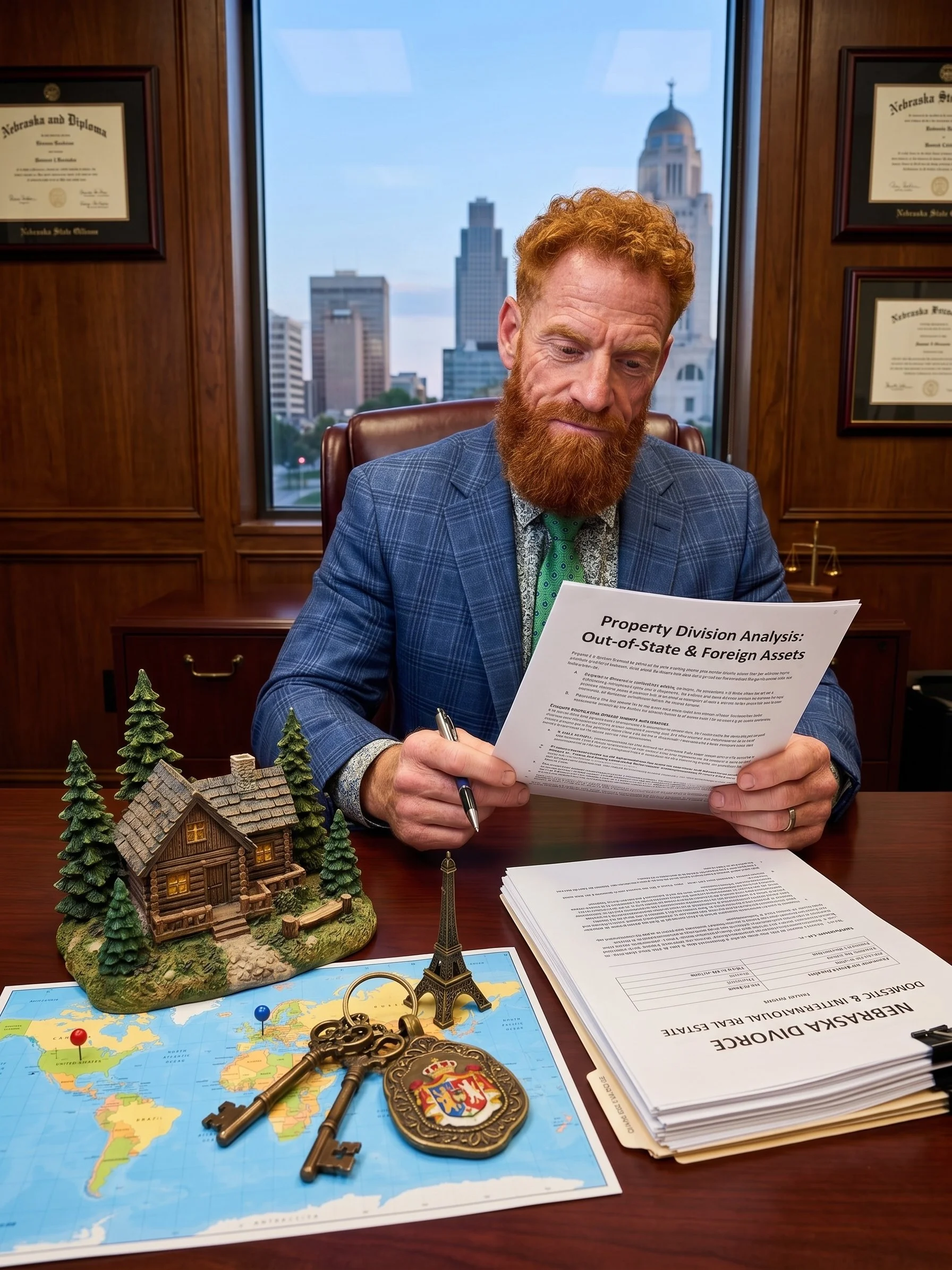
What Happens to an Out-of-State Cabin or Foreign Property in a Nebraska Divorce?
Dividing a cabin or foreign home in a Nebraska divorce involves more than deciding who keeps it. Jurisdiction, title law, valuation, taxes, transfer documents, and enforcement can determine whether the proposed division will actually work.

Is My Inheritance Safe If I Get Divorced in Nebraska?
An inheritance is generally presumed to be nonmarital property in Nebraska, but keeping it out of the marital estate may depend on what happened to it during the marriage. Joint accounts, missing records, marital debt payments, property improvements, and appreciation can all complicate the analysis. This article explains how Nebraska courts approach tracing, commingling, and inherited assets in divorce.

What Happens to My Business If I Divorce in Nebraska?
Own a business and facing divorce in Nebraska? Business interests can raise complicated questions about marital property, valuation, goodwill, cash flow, and whether one spouse can keep the company while fairly accounting for its value. This article explains how Nebraska courts may approach business ownership in divorce and what records business owners should gather early.

How Much Will My Nebraska Divorce Cost, and What Can I Do to Control It?
Divorce costs in Nebraska can vary widely depending on custody issues, property division, financial transparency, urgency, and how each spouse approaches the process. While no attorney can promise the total cost on day one, there are practical steps that can reduce avoidable fees, including getting organized early, staying responsive, narrowing your priorities, and using mediation or co-parenting support when appropriate. This article explains the biggest cost drivers in a Nebraska divorce and what you can do to make the process more manageable.

I’m Ready to Move On. How Does the Divorce Process Work in Nebraska?
Divorce is not just the end of a marriage. It is also a legal process that can affect parenting, finances, housing, safety, and long-term stability. This Nebraska-focused guide explains how divorce works, including no-fault divorce, residency requirements, filing in district court, the 60-day waiting period, property and debt division, custody, parenting plans, mediation, and what to gather before meeting with a lawyer.

Do I Need an “Aggressive” Divorce Lawyer in Nebraska?
Not every Nebraska divorce needs an “aggressive” lawyer in the performative sense. What most people need is a steady, strategic advocate who knows when to negotiate, when mediation may help, and when firm court action is necessary. This article explains why unnecessary escalation can increase costs, damage credibility, and make co-parenting harder, while still recognizing that some cases require prompt legal action to address hidden assets, parenting-time interference, safety concerns, or violations of court orders.

Who Has to Move Out of the House During a Nebraska Divorce?
Filing for divorce does not automatically mean one spouse has to leave the marital home. In Nebraska, who stays in the house may depend on safety concerns, temporary court orders, protection orders, parenting arrangements, finances, and the facts of the case. This article explains what Nebraska spouses should know before changing locks, moving out, signing a lease, or making decisions that could affect custody, property division, and household expenses.

What Is the Biggest Financial Mistake After Divorce in Nebraska?
Divorce settlements can feel final before the money is actually available. This Nebraska-focused guide explains why spending settlement funds too soon can create problems with property division, QDROs, refinancing, taxes, and post-divorce planning.

Can My Parents Sit In on My Call With My Nebraska Divorce Attorney?
Divorce is hard, and it is natural to want support from parents, family, or a new partner during legal meetings. But in a Nebraska divorce, custody, or paternity case, including someone else in conversations with your lawyer can create serious privilege and confidentiality concerns. This article explains when family involvement may put attorney-client privilege at risk, how third-party payment of legal fees works, and why legal strategy should usually stay between you and your attorney unless your lawyer approves a specific exception.

Why Is “Principle” So Expensive in a Nebraska Divorce?
Fighting over “principle” in a Nebraska divorce or custody case can feel justified, especially when emotions are high and the dispute feels personal. But not every fight is worth the financial, emotional, or legal cost. This article explains how Nebraska courts evaluate divorce, custody, parenting time, property division, and mediation issues, and why strategic decision-making often protects families better than courtroom escalation. It also discusses when litigation may be necessary, when mediation may help, and how to think clearly about proportionality, safety, children, and long-term outcomes.

Is It Okay to Be Excited About Getting Divorced?
Is it normal to feel excited about your divorce? For a lot of people, yes — and quietly worrying that something is wrong with you for feeling lighter is one of the most common (and least talked about) parts of the process. In this post, a Nebraska family lawyer and Parenting Act mediator with thirteen years of practice walks through why relief and grief so often coexist, what Nebraska's no-fault dissolution framework actually requires, how to handle strong feelings during a pending case so they don't accidentally hurt your custody or finances, and what to do if your honest reaction is closer to grief than to celebration.

How can you accidentally make your Nebraska divorce a disaster?
Most Nebraska divorce “disasters” aren’t intentional. They usually happen when someone panics, vents in writing, or treats the case like a war instead of a problem to solve. In Nebraska District Court, the judge isn’t there to decide who was the “better” spouse. The court is focused on two things: a child-centered parenting plan under the Nebraska Parenting Act, and a fair division of property and debt. This guide walks through the biggest avoidable mistakes that make divorces longer, more expensive, and harder on kids—like putting children in the middle, assuming Nebraska is automatically “50/50,” creating a bad text or social media trail, and slow-walking financial disclosure. If you’re trying to protect your kids, your finances, and your future, the goal is simple: stay steady, stay organized, and don’t create evidence you’ll regret later

Beyond the Courtroom: Is Your Nebraska Divorce About Your Past or Your Future?
Divorce and custody cases in Nebraska aren’t just about what happened—they’re about what happens next. Your decree or parenting plan becomes the day-to-day framework for your kids, your finances, and your stability for years. This article breaks down how the Nebraska Parenting Act, parenting plans, mediation, and equitable division of the marital estate work together, and how a future-focused strategy can protect your peace and reduce the odds you end up back in court.
Please note:
The content on this blog is for general informational purposes only and is not legal advice.
Reading it does not create an attorney-client relationship.
For personalized guidance tailored to your specific circumstances,
it's always best to connect with a qualified attorney.