

Can One Parent Receive Primary Physical Custody in Nebraska When Both Parents Are Fit?
A Nebraska court can find both parents fit and still place primary physical custody with one of them. In a September 2026 memorandum opinion, the Nebraska Court of Appeals affirmed exactly that result where the parents lived about an hour apart and the child had significant school and therapy needs. This article explains what the decision does and does not mean, how Nebraska's best-interests statute changed in July 2026, why temporary orders do not control the final decree, and what the same opinion says about time-limited alimony for a long-term homemaker.

Can Nebraska Parents Use a Child's School as the Custody Exchange Location?
A child's school can be one option for custody exchanges under a Nebraska parenting plan, but it depends entirely on the school calendar. This article explains when a school-based exchange may make sense, where it tends to break down, what a well-drafted exchange provision should address, and what happens under Nebraska law when the arrangement stops working.

At What Age Can a Child Choose Which Parent to Live With or Where to Go to School in Nebraska?
Parents often hear that a child can "choose" at 12, 14, or 16. Nebraska law says otherwise. There is no age at which a child decides custody or school placement; instead, a court may consider a child's wishes as one part of a best-interests analysis when the child has sufficient comprehension and sound reasoning. This post explains how Nebraska courts receive a child's views, why school choice follows its own legal-custody rule, what a modification request actually requires, and how to keep your child out of the middle.

Can My Child’s School Take Sides in a Nebraska Custody Case?
School issues can become a major source of conflict in a Nebraska custody case, especially when parents disagree about records, attendance, teachers, counseling, or where a child should attend school. Nebraska law gives parents important rights, but those rights depend on the court order, procedural posture, type of record, and school involved. Learn what school evidence may matter, how education records can be accessed, and where legal and practical boundaries arise.

Will Co-Parenting Apps and Shared Calendars Hold Up as Evidence in a Nebraska Custody Case?
Co-parenting-app messages, shared calendars, screenshots, and exports may be used as evidence in a Nebraska custody case—but no format is automatically admissible. This guide explains authentication, hearsay, provider certifications, preservation, and why admissibility is different from evidentiary weight or a successful outcome.

Can a Nebraska Court Make One Parent Pay Private-School Tuition?
Choosing a private school and paying for it are two separate legal questions in a Nebraska divorce, custody, or paternity case. The answer depends on legal custody, the language of the existing order, the child’s educational circumstances, the parents’ finances, and the evidence presented. This article explains what Nebraska law says about unilateral enrollment, tuition allocation, modification, mediation, and direct payments made outside the order.

Who Decides Where a Child Goes to School After a Divorce in Nebraska?
A child’s school can become a difficult issue after divorce, especially when parents share joint legal custody or a proposed move would change school districts. In Nebraska, the answer depends on the complete decree and parenting plan—not simply on which parent has more overnights. This guide explains legal and physical custody, final decision-making authority, the Vyhlidal decisions, mediation, modification, relocation, and the evidence that may matter in a school-choice dispute.

How Are Railroad Retirement Benefits Divided in a Nebraska Divorce?
Railroad retirement benefits do not follow the same rules as an ordinary pension or 401(k). Learn how Nebraska divorce law treats Tier I and Tier II benefits, what the Railroad Retirement Board requires, and how railroad schedules may affect parenting plans.

Is My Spouse Spying on Me? How Can I Protect My Digital Privacy Before Filing for Divorce in Nebraska?
Shared devices, cloud accounts, location services, and family phone plans can expose private communications before and during a Nebraska divorce. This guide explains how to secure your own accounts, preserve digital evidence, avoid harmful self-help, and coordinate technology decisions with legal counsel.

How Does a Constantly Traveling Work Schedule Affect Child Custody in Nebraska?
If your job keeps you on the road, your Nebraska custody case depends on more than your work schedule. A strong parenting plan must protect your child’s safety, school routine, stability, and relationship with both parents where appropriate. Zachary W. Anderson Law helps Nebraska parents build practical custody and parenting-time plans for real-world work schedules, including travel-heavy jobs, rotating shifts, and relocation concerns.
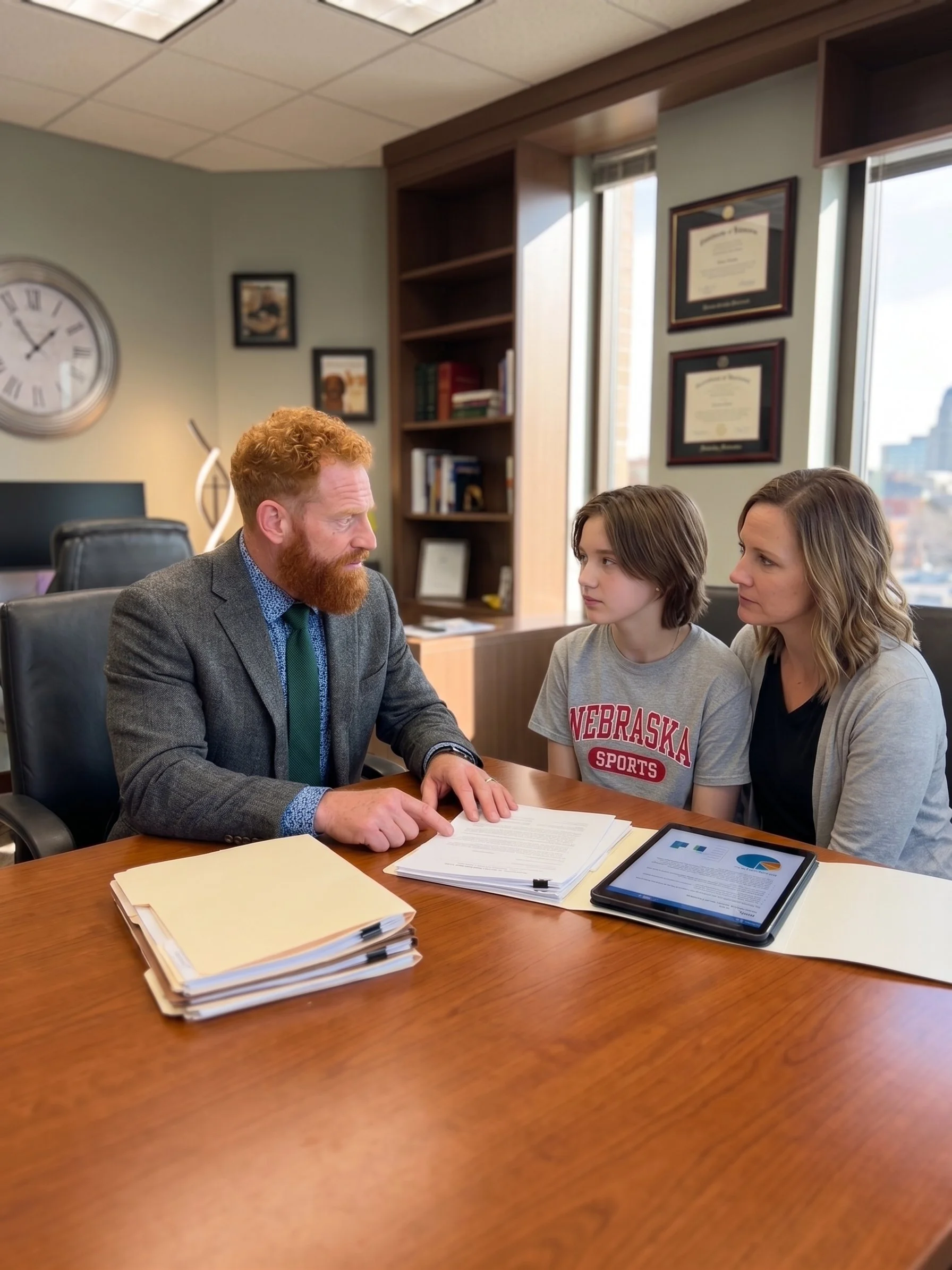
What Does the Supreme Court’s Transgender Sports Ruling Mean for Nebraska Families?
The Supreme Court’s transgender sports ruling is a major legal development, but Nebraska families still need clear, local guidance. This article explains how the decision interacts with Nebraska’s LB 89, what questions remain open, and how school sports disputes can become custody, parenting-plan, and co-parenting issues.

Who Pays for Private School Tuition and the “Extras” in a High-Asset Nebraska Divorce?
In Nebraska divorce and custody cases, private school tuition, club sports, tutoring, camps, and other child-related expenses can create conflict if the decree or parenting plan does not address them clearly. Our firm helps parents evaluate whether these expenses should be included in monthly support, handled separately, negotiated through mediation, or presented to the court with the right evidence and order language.

Can I Take My Kids on an International Trip After My Nebraska Divorce?
Can you take your child abroad after a Nebraska divorce? The answer depends on your decree, parenting plan, passport status, destination, and the other parent’s rights. This article explains the difference between travel permission and passport consent, what Nebraska parents should review before booking, and what options may be available when a co-parent objects.

Why Do So Many Nebraska Wives File for Divorce First?
Why do so many wives file for divorce first? The answer is usually more complicated than one moment or one argument. This Nebraska-focused article explains why divorce may feel sudden to one spouse but long overdue to the other, what filing first does and does not mean legally, and how Nebraska courts approach custody, parenting plans, property division, alimony, and temporary orders.

How Do We Make Co-Parenting Work After Separating in Nebraska?
Separating as parents in Nebraska is not just a legal change. It is a family transition that requires structure, safety, and child-centered decision-making. This article explains how Nebraska parenting plans work, what legal custody and physical custody mean, how mediation may fit into the process, and why co-parenting is not always the right model when safety concerns are present. It also offers practical guidance for parents trying to protect their children from adult conflict while following court orders and building a workable two-household routine.

How Do I Navigate a Military Divorce in Nebraska?
Military divorce in Nebraska can involve more than the usual divorce issues. Service members and spouses may need to address deployment, parenting plans, child support based on military pay, alimony, military retired pay, DFAS rules, Survivor Benefit Plan coverage, TRICARE, and jurisdiction questions. This article explains the key Nebraska and federal issues military families should understand before filing, negotiating, or signing a divorce agreement

How Much Will My Nebraska Divorce Cost, and What Can I Do to Control It?
Divorce costs in Nebraska can vary widely depending on custody issues, property division, financial transparency, urgency, and how each spouse approaches the process. While no attorney can promise the total cost on day one, there are practical steps that can reduce avoidable fees, including getting organized early, staying responsive, narrowing your priorities, and using mediation or co-parenting support when appropriate. This article explains the biggest cost drivers in a Nebraska divorce and what you can do to make the process more manageable.

Is My Spouse Spying on Me During Our Nebraska Divorce?
Worried your spouse may be reading your messages, tracking your location, monitoring your home WiFi, or using cameras during a Nebraska divorce? This article explains what to do first, how to preserve evidence, when to avoid confrontation, and how surveillance concerns may affect divorce, custody, parenting plans, protection orders, and court evidence.

How Do I Co-Parent When My Ex and I Can’t Be Friends?
You do not have to be friends with your ex to co-parent well. For many Nebraska parents, the healthier goal is calm, child-focused communication that follows the parenting plan and reduces unnecessary conflict. This article explains how the “polite business partner” approach can help parents set boundaries, communicate more clearly, and protect their children from adult conflict, while still recognizing that safety concerns, domestic abuse, protection orders, and court orders must always come first.

Do I Need an “Aggressive” Divorce Lawyer in Nebraska?
Not every Nebraska divorce needs an “aggressive” lawyer in the performative sense. What most people need is a steady, strategic advocate who knows when to negotiate, when mediation may help, and when firm court action is necessary. This article explains why unnecessary escalation can increase costs, damage credibility, and make co-parenting harder, while still recognizing that some cases require prompt legal action to address hidden assets, parenting-time interference, safety concerns, or violations of court orders.
Please note:
The content on this blog is for general informational purposes only and is not legal advice.
Reading it does not create an attorney-client relationship.
For personalized guidance tailored to your specific circumstances,
it's always best to connect with a qualified attorney.