

What Does Legal Capacity Mean in Nebraska, and When Might It Be Too Late to Sign?
Legal capacity issues often come up when families are already under stress, and Nebraska law does not always give easy, one-size-fits-all answers. This article explains how capacity works in Nebraska for wills, financial powers of attorney, health care powers of attorney, guardianship, and conservatorship, and why timing matters when planning may be narrowing. It is designed to help readers better understand the legal framework, the risks of waiting too long, and the difference between a medical diagnosis and a legal finding.

What Can Cher’s Conservatorship Story Teach Nebraska Families About Adult Conservatorships in Nebraska?
Cher’s conservatorship story put a deeply personal legal issue into the national spotlight, but Nebraska families need Nebraska answers. This post explains how adult conservatorships, guardianships, emergency relief, and powers of attorney actually work under Nebraska law, including when a court may step in, what evidence matters, and why planning ahead can sometimes reduce the need for court involvement.

If my child on SSI or Medicaid inherits money in Nebraska, can a first-party special needs trust (d4A) protect their benefits?
If a child or adult with disabilities is on SSI or Medicaid and suddenly inherits money, that “gift” can accidentally trigger a benefits crisis. SSI has a strict $2,000 resource limit, and Nebraska Medicaid rules can be different depending on the program, so a direct inheritance can mean interrupted checks, delayed services, and a paperwork spiral. In many cases, a first-party special needs trust (also called a d4A trust) is the fix that protects both the inheritance and vital benefits, as long as it’s set up correctly and on time. This article explains how d4A trusts work in Nebraska, the age rule that trips families up (often phrased as “64 or younger”), what the trust can pay for, and the biggest mistakes to avoid when money is already on its way.

What Is an Estate Plan, and Why Does Every Adult Need One?
Estate planning is about more than passing on assets—it’s about protecting your family and your voice. At Zachary W. Anderson Law, we help individuals and families in Lincoln and across Nebraska create clear, legally sound estate plans that work when life takes an unexpected turn. From Wills and Trusts to Powers of Attorney and Living Wills, we focus on giving you control, reducing court involvement, and making sure the people you trust can act for you when it matters most.

How Did a Nebraska Guardian Accused of Abuse Keep Dozens of Wards—and What Does That Reveal About Our Guardianship System?
When Nebraska families place a loved one under guardianship, they expect protection—not exploitation. But recent investigative reporting revealed that a private guardian accused of abusing a vulnerable adult remained court-appointed for dozens of others across the state. That case exposed a critical gap in Nebraska’s guardianship system: private guardians are not subject to the same caseload limits or oversight as the Office of Public Guardian.

What Taylor Swift’s Airtight Estate Planning Can Teach the Rest of Us (Yes, Even in Nebraska)
Taylor Swift didn’t avoid legal chaos by luck. She avoided it through intentional estate planning. This post explains how clear documents, limited authority, and early planning can keep families out of court—and why those same lessons matter just as much for everyday Nebraskans.

When Is Something Really an Emergency in Nebraska Family Court?
Not every custody dispute or family conflict qualifies as a legal emergency. In Nebraska, judges reserve ex parte and emergency orders for situations involving immediate, irreparable harm supported by sworn evidence. This guide explains how Nebraska courts actually evaluate emergency motions, why affidavits often matter more than courtroom testimony, and what parents should file instead when a situation is serious but not truly emergent. Written from the perspective of a Lincoln family-law attorney who regularly practices in Lancaster County, this article helps you protect both your child and your credibility with the court.
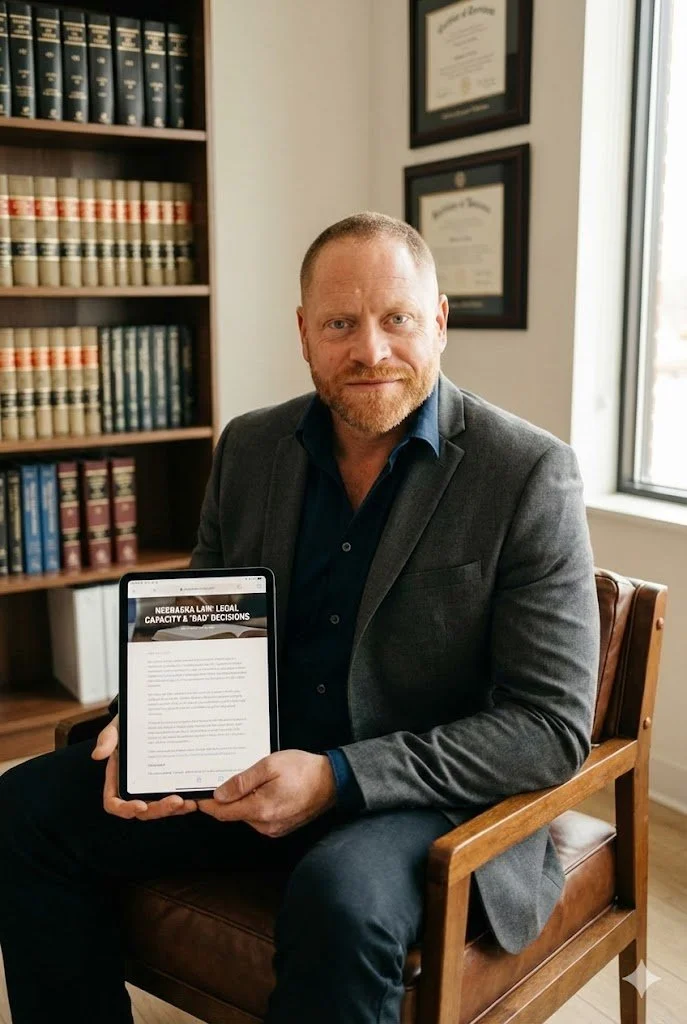
Does Making “Bad” Decisions Mean Someone Lacks Legal Capacity in Nebraska?
Does making “bad” decisions mean someone lacks legal capacity in Nebraska? Not necessarily. Under Nebraska law, adults are presumed to have capacity, even when their choices seem risky or unwise to others. Courts focus on how a decision is made, not whether family members or judges agree with the outcome. This article explains how Nebraska courts evaluate decision-making capacity, why guardianship requires clear and convincing evidence, and how concepts like the least restrictive alternative protect individual autonomy in estate planning, guardianship, and settlement disputes.

Guardianship vs. Power of Attorney: A Nebraska Family’s Guide to Making the Right Call
When an aging parent starts to decline, Nebraska families often wonder whether they truly need to go through guardianship — or if a Power of Attorney is enough. In Nebraska, the process is unique: judges must use the “least restrictive alternative,” Court Visitors investigate the parent’s situation, and guardianship and conservatorship carry serious reporting duties. This guide breaks down how those roles work, when a POA can avoid court altogether, and when guardianship becomes the only safe option. If you’re trying to protect a parent’s dignity while keeping them safe, this is a practical place to start.

When SNAP Benefits Stop: How Food Assistance Gaps Affect Nebraska Families and Family Law Cases
When SNAP benefits stop, Nebraska families face more than empty cupboards — they face legal and economic fallout. A temporary lapse in food assistance can affect custody cases, guardianships, and even small-town businesses that depend on SNAP spending. This article explains how Nebraska law treats benefit disruptions, what courts consider under the “best interests of the child” standard, and how families can protect themselves when the safety net fails.

What Is Día de las Mascotas Muertas — and How Can Nebraska Pet Owners Honor Their Pets’ Legacies?
Día de las Mascotas Muertas — the “Day of the Dead for Pets” — is celebrated on October 27 to honor the lives of beloved animals who’ve passed away. Families build small altars with photos, toys, and marigolds to welcome their pets’ spirits home, creating a touching space for remembrance and healing. This tradition also highlights an important legal truth for Nebraska pet owners: you can include your pets in your estate plan through a will or pet trust, ensuring their care continues no matter what. Learn how this beautiful day of remembrance connects culture, love, and practical planning for your four-legged family members.

Avoiding Legal “Jump Scares” in Nebraska: A Guide to Guardianship, Custody, and Powers of Attorney
When legal emergencies strike — a sudden guardianship filing, an ex parte custody order, or a medical crisis without a power of attorney — families can find themselves overwhelmed and unprepared. This post explains how to prevent these “legal jump scares” before they happen. Learn how guardianship nominations, updated custody plans, and durable powers of attorney can protect your rights, your loved ones, and your peace of mind.

What the Lori Loughlin–Mossimo Giannulli Prenup Teaches Us About Asset Protection
Celebrity prenups make headlines, but the real lessons apply at home. When Lori Loughlin and Mossimo Giannulli’s decades-old agreement resurfaced during their separation, it highlighted how easily outdated contracts can jeopardize financial security. Learn how Nebraska law handles prenuptial and postnuptial agreements, what makes them enforceable, and why updating yours could protect your estate and peace of mind.

What Does the Ed Gein Case Teach Us About the Insanity Defense Today?
Netflix’s new docuseries has everyone talking—but beyond the horror lies a real legal question: what happens when mental illness intersects with criminal law? This post explains how Nebraska handles the insanity defense, competency to stand trial, and legal capacity in both criminal and guardianship cases. Clear, compassionate, and grounded in real law, it’s a must-read for anyone navigating mental health and the justice system.

What Diane Keaton’s Passing Teaches Us About Planning for Incapacity
When actress Diane Keaton passed away, her legacy sparked an important reminder: incapacity can happen to anyone. In Nebraska, planning ahead with a Durable Power of Attorney, Advance Directive, and HIPAA release can prevent costly guardianship proceedings and ensure your wishes are honored. This post explains how incapacity planning works under Nebraska law—and why it’s one of the most important parts of your estate plan.

Mr. Olympia 2025 and Nebraska Law: Can Parents Be Liable for a Minor’s Bodybuilding or Supplement Use?
After Mr. Olympia 2025 reignited a new wave of youth bodybuilding, more Nebraska families are asking: how far is too far when it comes to supplements, training, and competition prep for minors? This post breaks down what state law says about parental consent, steroid use, and coaching contracts—and how guardianship and custody issues can arise when health and safety cross legal lines.

Should You Seek Therapy During a Family Law Case in Nebraska?
Going through a divorce, custody dispute, or guardianship in Nebraska isn’t just a legal challenge—it’s an emotional one. Many clients find that therapy provides the tools to manage stress, make clearer decisions, and present themselves more effectively in court. This article explains how therapy can support your legal case, protect your children’s well-being, and why Nebraska judges often view it as a sign of strength, not weakness.

What Legal Protections Exist During Domestic Violence Awareness Month in Nebraska?
Domestic violence is not just physical—it can include emotional abuse, financial control, and intimidation that leave survivors feeling trapped. In Nebraska, the law provides strong protections, from protection orders and emergency custody to guardianships that safeguard children and vulnerable adults. During Domestic Violence Awareness Month, our firm stands with survivors by offering compassionate legal guidance and connecting them with critical resources. If you or someone you love is facing abuse, you are not alone—and legal help is available.
Please note:
The content on this blog is for general informational purposes only and is not legal advice.
Reading it does not create an attorney-client relationship.
For personalized guidance tailored to your specific circumstances,
it's always best to connect with a qualified attorney.