

What Happens If My Unmarried Partner Dies Without a Will in Nebraska?
If your unmarried partner dies without a will in Nebraska, the law does not treat you as an heir or default decision-maker. Assets typically pass to parents, siblings, or children, not to a long-term partner. This article explains how Nebraska intestacy and medical decision-making laws actually work, the risks unmarried couples face, and how the right estate planning documents can protect the person you love.
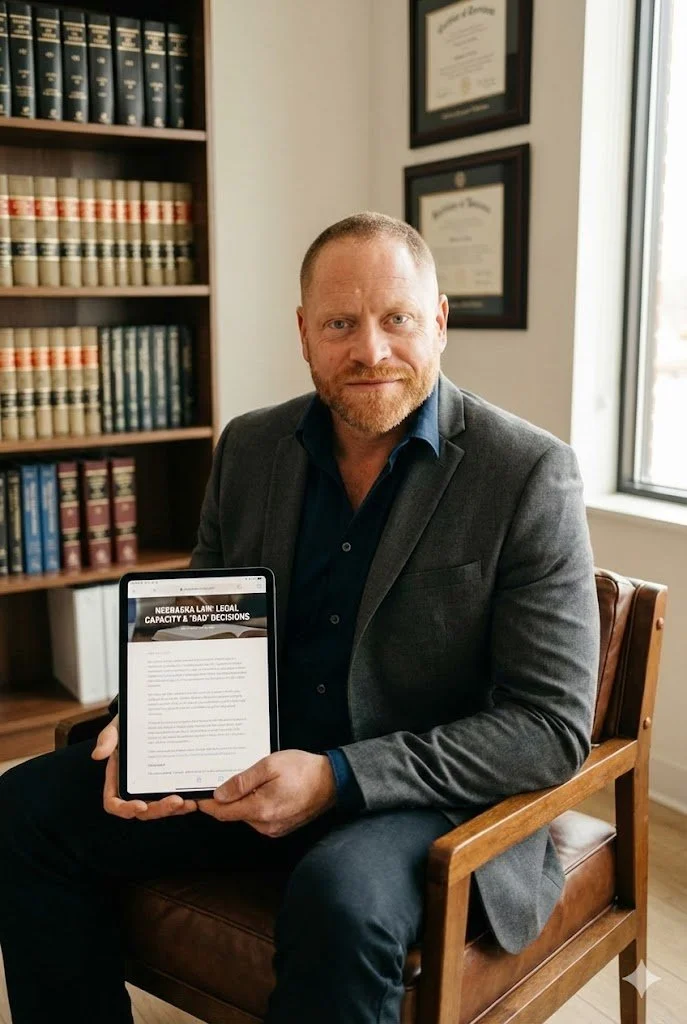
Does Making “Bad” Decisions Mean Someone Lacks Legal Capacity in Nebraska?
Does making “bad” decisions mean someone lacks legal capacity in Nebraska? Not necessarily. Under Nebraska law, adults are presumed to have capacity, even when their choices seem risky or unwise to others. Courts focus on how a decision is made, not whether family members or judges agree with the outcome. This article explains how Nebraska courts evaluate decision-making capacity, why guardianship requires clear and convincing evidence, and how concepts like the least restrictive alternative protect individual autonomy in estate planning, guardianship, and settlement disputes.

“But I’m His Wife.” Why That’s Not Enough in the Eyes of the Law.
Marriage doesn’t automatically give you the legal authority to act on your spouse’s behalf. If your partner becomes incapacitated and you don’t have a power of attorney in place, you may be blocked from accessing accounts, managing bills, or even talking to their insurance provider. Love and commitment matter—but in the eyes of the law, it’s all about agency. And that has to be granted, not assumed.
Please note:
The content on this blog is for general informational purposes only and is not legal advice.
Reading it does not create an attorney-client relationship.
For personalized guidance tailored to your specific circumstances,
it's always best to connect with a qualified attorney.