

Can One Parent Receive Primary Physical Custody in Nebraska When Both Parents Are Fit?
A Nebraska court can find both parents fit and still place primary physical custody with one of them. In a September 2026 memorandum opinion, the Nebraska Court of Appeals affirmed exactly that result where the parents lived about an hour apart and the child had significant school and therapy needs. This article explains what the decision does and does not mean, how Nebraska's best-interests statute changed in July 2026, why temporary orders do not control the final decree, and what the same opinion says about time-limited alimony for a long-term homemaker.

Why Should Nebraska Parents Resolve Holiday Parenting Schedules in September Instead of November?
Holiday parenting-time disagreements rarely announce themselves early. This post explains what Nebraska parenting plans must say about holidays and school breaks, why the plan's own language decides whether holiday time displaces the regular schedule, and how mediation, coaching, and court approval fit together. It also lays out what to review in September so a question about Thanksgiving or winter break has room to be answered before the holiday arrives.

Can Nebraska Parents Use a Child's School as the Custody Exchange Location?
A child's school can be one option for custody exchanges under a Nebraska parenting plan, but it depends entirely on the school calendar. This article explains when a school-based exchange may make sense, where it tends to break down, what a well-drafted exchange provision should address, and what happens under Nebraska law when the arrangement stops working.

At What Age Can a Child Choose Which Parent to Live With or Where to Go to School in Nebraska?
Parents often hear that a child can "choose" at 12, 14, or 16. Nebraska law says otherwise. There is no age at which a child decides custody or school placement; instead, a court may consider a child's wishes as one part of a best-interests analysis when the child has sufficient comprehension and sound reasoning. This post explains how Nebraska courts receive a child's views, why school choice follows its own legal-custody rule, what a modification request actually requires, and how to keep your child out of the middle.

How Does Nebraska's NIL Law Affect Student-Athletes, Agents, and Local Businesses?
Nebraska has regulated name, image, and likeness compensation since 2020, and the statute has been amended twice since — most recently in 2024. The version described in a lot of online commentary is not the version a Nebraska court reads. This guide walks through what the Nebraska Student-Athlete Name, Image, or Likeness Rights Act actually protects, the four limits that most often send a contract back for revision, how private an agreement really is once it reaches a public institution, when someone negotiating a deal may need to register as an athlete agent, and where NIL questions intersect with parenting plans, a minor's funds, and civil contract disputes in Nebraska.

My Child Was Hurt at School, at Practice, or on the Bus — What Should I Do First in Nebraska?
When a child is injured at a Nebraska public school, at practice, or on a school bus, the procedures that may apply are often not the ones parents expect. Claims against a school district or another political subdivision generally run through the Political Subdivisions Tort Claims Act, which requires a written claim filed with a specific statutory recipient, has its own timing rules, and includes immunity exemptions and a recovery cap. Claims against a private party may follow an entirely different path, and one incident can involve both. This article walks through how those tracks differ, what the recreational-activities and discretionary-function exemptions actually require, how Nebraska handles a minor's settlement funds, and the coordination questions that arise when parents are separated.

Can a Nebraska Public School Out an LGBTQ+ Student to Their Parents or the Public?
Most people assume FERPA keeps a student's gender identity or sexual orientation private from everyone without consent. That is half right. Federal and Nebraska law do restrict what a public school can tell the press, the community, or another family — but neither is a shield against the student's own parents, and Nebraska's records statute has three wrinkles that national explainers miss, including an age-of-majority gap between eighteen and nineteen. Here is what Neb. Rev. Stat. § 79-2,104 actually says, where parental access begins and ends, why a Nebraska privacy lawsuit is harder than it sounds, and what to do first if a disclosure has already happened.

What Should a Nebraska Parent Do First If Their Child Is Being Cyberbullied, Deepfaked, or Sextorted?
Do not pay. Do not delete. Do not forward the image. When a Nebraska child is targeted by cyberbullying, an AI deepfake, or sextortion, the first day matters more than parents realize — and one well-intentioned instinct can create criminal exposure for the parent. Here's what the law actually allows, including the 48-hour federal takedown most families have never heard of.

Can a Noncustodial Parent See School Records or Attend Conferences in Nebraska?
A noncustodial parent may have strong rights to school records in Nebraska, but those rights do not automatically include portal credentials, conference attendance, emergency-contact status, pickup authority, or campus access. This article explains how Nebraska law, FERPA, the parenting plan, and school policy fit together—and what to review before contacting the school.

What Happens When Divorced Parents in Nebraska Disagree About the School Year?
School enrollment, transportation, weekday schedules, and extracurricular activities can create difficult disputes when Nebraska co-parents do not agree. This guide explains how legal custody, parenting plans, mediation requirements, and the child’s best interests fit together when the school year is approaching.
What Does the Supreme Court’s Transgender Sports Ruling Mean for Nebraska Families?
The Supreme Court’s transgender sports ruling is a major legal development, but Nebraska families still need clear, local guidance. This article explains how the decision interacts with Nebraska’s LB 89, what questions remain open, and how school sports disputes can become custody, parenting-plan, and co-parenting issues.

Who Pays for Private School Tuition and the “Extras” in a High-Asset Nebraska Divorce?
In Nebraska divorce and custody cases, private school tuition, club sports, tutoring, camps, and other child-related expenses can create conflict if the decree or parenting plan does not address them clearly. Our firm helps parents evaluate whether these expenses should be included in monthly support, handled separately, negotiated through mediation, or presented to the court with the right evidence and order language.

What Happens to Child Support in Nebraska When a Parent Earns Well Above the Guidelines?
High-income Nebraska child support cases often turn less on the chart and more on the evidence: what counts as income, what expenses are already included, and what child-specific needs should be addressed separately. This article explains how Nebraska courts may approach support above the guideline table, including bonuses, RSUs, business income, retained earnings, modifications, and additional child-related expenses.

How Do I Protect My Reputation and Business Relationships During a High-Profile Divorce in Nebraska?
A high-profile divorce in Nebraska can affect more than the marital estate. If you own a business, rely on referrals, employ people, or have a visible role in your community, the case can put your reputation, clients, employees, lenders, and court-file privacy under pressure. This article explains practical Nebraska-specific tools for reducing risk, including careful communication, discovery protections, business-document review, settlement terms, and attorney-led planning.

Can I Take My Kids on an International Trip After My Nebraska Divorce?
Can you take your child abroad after a Nebraska divorce? The answer depends on your decree, parenting plan, passport status, destination, and the other parent’s rights. This article explains the difference between travel permission and passport consent, what Nebraska parents should review before booking, and what options may be available when a co-parent objects.

What Are the Legal Requirements to Get Married in Nebraska?
Getting married in Nebraska is usually straightforward, but the legal details still matter. This article explains Nebraska’s marriage license requirements, age rules, witnesses, officiants, remarriage timing after divorce, common-law marriage issues, and when a marriage may raise annulment concerns. It also covers why marriage-status questions can become important in Nebraska divorce, custody, parenting plan, estate planning, and probate matters.

Why Do So Many Nebraska Wives File for Divorce First?
Why do so many wives file for divorce first? The answer is usually more complicated than one moment or one argument. This Nebraska-focused article explains why divorce may feel sudden to one spouse but long overdue to the other, what filing first does and does not mean legally, and how Nebraska courts approach custody, parenting plans, property division, alimony, and temporary orders.
How Much Will My Nebraska Divorce Cost, and What Can I Do to Control It?
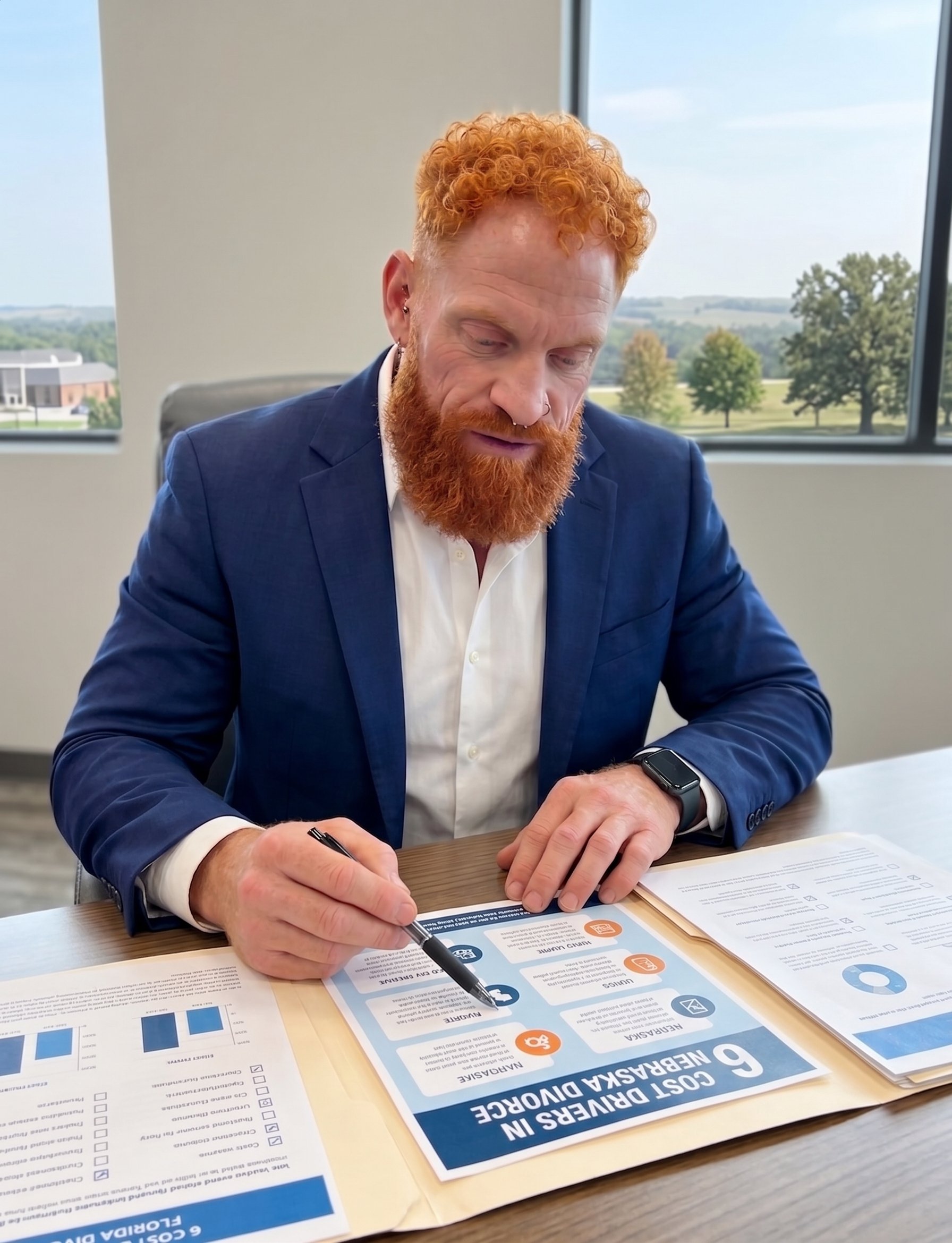
Divorce costs in Nebraska can vary widely depending on custody issues, property division, financial transparency, urgency, and how each spouse approaches the process. While no attorney can promise the total cost on day one, there are practical steps that can reduce avoidable fees, including getting organized early, staying responsive, narrowing your priorities, and using mediation or co-parenting support when appropriate. This article explains the biggest cost drivers in a Nebraska divorce and what you can do to make the process more manageable.

Is My Spouse Spying on Me During Our Nebraska Divorce?
Worried your spouse may be reading your messages, tracking your location, monitoring your home WiFi, or using cameras during a Nebraska divorce? This article explains what to do first, how to preserve evidence, when to avoid confrontation, and how surveillance concerns may affect divorce, custody, parenting plans, protection orders, and court evidence.

Will Getting a Divorce in Nebraska Hurt My Children?
Divorce is hard enough, but for parents, the biggest worry is often what it will mean for the children. In Nebraska divorce cases involving minor children, the court focuses on the child’s best interests, including custody, parenting time, parenting plans, safety, stability, and ongoing parental involvement when appropriate. This article explains how Nebraska courts approach divorce with children, what a parenting plan should address, how mediation or specialized dispute resolution may fit into the process, and practical steps parents can take to reduce conflict and protect their children during a major family transition.
Please note:
The content on this blog is for general informational purposes only and is not legal advice.
Reading it does not create an attorney-client relationship.
For personalized guidance tailored to your specific circumstances,
it's always best to connect with a qualified attorney.