
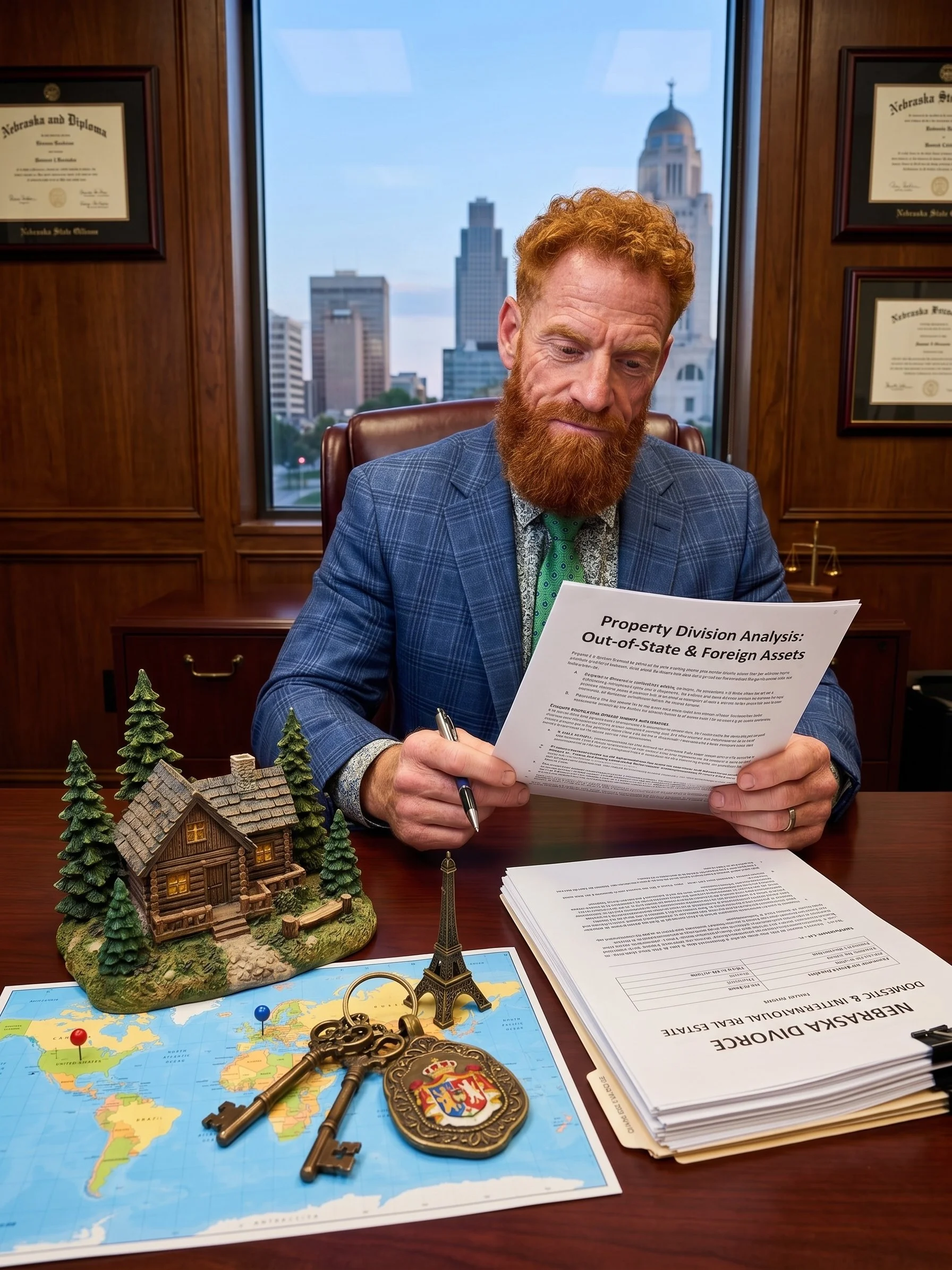
What Happens to an Out-of-State Cabin or Foreign Property in a Nebraska Divorce?
Dividing a cabin or foreign home in a Nebraska divorce involves more than deciding who keeps it. Jurisdiction, title law, valuation, taxes, transfer documents, and enforcement can determine whether the proposed division will actually work.

What Happens If I Can’t Pay My Nebraska Divorce Settlement While an Appeal Is Pending?
Appealing a Nebraska divorce decree does not automatically pause payment obligations. Based on the Nebraska Court of Appeals’ memorandum opinion in McReynolds v. McReynolds, this article explains why equalization payments, attorney-fee awards, and other financial obligations may remain enforceable during an appeal unless proper supersedeas or stay procedures are followed. It also discusses how Nebraska courts may evaluate “inability to pay,” why valuable non-cash assets can matter, and what steps a person should consider before missing a court-ordered divorce payment deadline.

When you buy a home with premarital money, is it still yours in a Nebraska divorce?
If you sold a home you owned before marriage and used that money as the down payment on the house you shared with your spouse, you’re probably asking a simple question with a complicated answer: does that contribution stay yours in a Nebraska divorce, or does it get split? Nebraska divides property “equitably,” meaning fairly, and the outcome often turns on two things most people don’t think about until it’s too late: whether you can trace the down payment back to a nonmarital source, and how Nebraska’s source-of-funds rules treat mortgage principal paydown during the marriage. In this post, I break down the framework Nebraska courts use, explain what evidence actually matters, and walk through a recent Court of Appeals decision, Patach v. Patach (2026), to show how an $80,000 premarital down payment was treated and why that classification changed the equalization analysis.
Please note:
The content on this blog is for general informational purposes only and is not legal advice.
Reading it does not create an attorney-client relationship.
For personalized guidance tailored to your specific circumstances,
it's always best to connect with a qualified attorney.